| class | FMST 302: Introduction to Media Studies |
| dates | April 2024 |
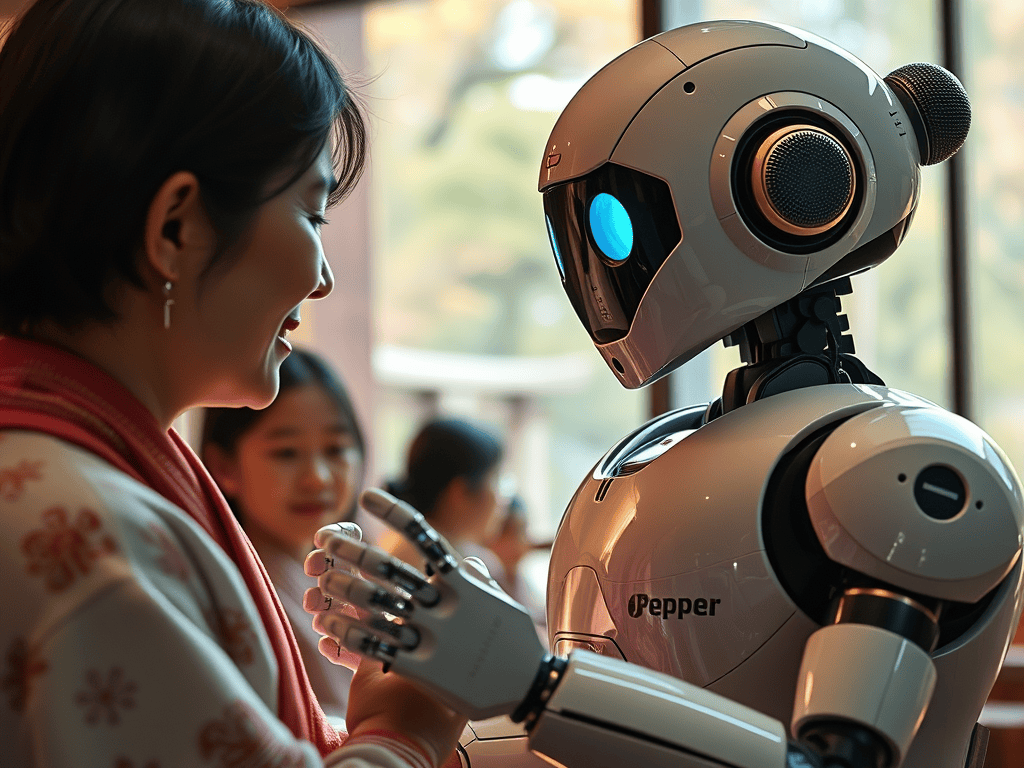
This was a project I completed with two classmates, proposing a syllabus for a hypothetical class on artificial intelligence in the context of media studies. We were interested in the phenomenon of people engaging with AI chatbots as if they were real people, and chose to each focus on a different facet of this as a separate unit of the syllabus. My area of interest was in technological animism and the ELIZA effect, observing a kind of digital pareidolia manifesting where individuals were subconsciously seeking signs of sentience in AI chatbots. In retrospect, and with the added context of the proliferation of AI across all aspects of society nearly three years later, I wish I had also considered how the sycophancy inherent to AI chatbots (particularly ChatGPT) enables and encourages anthropomorphism and even parasocial relationships with AI.
AI and Imitation of Identity
Beginning from Weiner’s writings on cybernetics and Haraway’s writing on the cyborg, this
syllabus aims to take these concepts and apply them to AI and the imitation of identity. While these
serve as the general theoretical outline for this syllabus,each work also approaches the question of
technology and imitation from the perspective of the human. In contrast, this syllabus aims to balance
this approach so technology (AI) as well as human-ness can both be used as starting points to consider
what imitation of human identity means for both technology and human. This syllabus aims to
provide resources to think about AI and imitative identity through three perspectives: AI imitation of
life, the dead, and authorship.
The first section of this syllabus concerns the phenomenon of humans identifying and
empathizing with technology, specifically robots and AI chatbots. Jackson explores the concept of an
imitative identity, in which human identities are constructed from mimicries of the people and the
world around them, and applies this concept to technology via Mary Shelley’s Frankenstein (1818) and
Steven Spielberg’s AI: Artificial Intelligence (2001). Richardson describes her own experiences visiting
robotic development facilities across the US and Japan and relates what she saw to the idea of
technological animism: “the conceptual model of personhood that emerges in the interaction between
fiction, robotics, and culturally specific models of personhood, which may already include non-human
persons.” This article specifically explores the Japanese cultural and religious values that lead to their
anthropomorphism of robots. Slater describes the history of AI-powered chatbots and the
circumstances that led to a Microsoft chatbot being trained into neo-Nazi ideology within 48 hours,
and the nature of the relationships people form with chatbots from therapeutic to transactional.
Finally, a 2023 New York Times article demonstrates the convergence of all the concepts previously
discussed; a journalist went into a conversation with Bing’s chatbot hoping to find something deeper,
and continually pushed for answers until he found what he saw as irrefutable proof of its sentience.
This section aims to show how AI and technology can achieve semblances of personhood through
mimesis and anthropomorphization, and to demonstrate the different ways in which humans interact
and empathize with AI.
The second perspective within this syllabus focuses on the effects of AI imitating identities of
the deceased in social interactions surrounding death and grief. The Cerulo piece focuses on how
humans currently interact with non-humans in social interactions. This provides a starting point for
thinking about non-human/human interactions in regards to AI imitations of the deceased. The
Sawicka paper discusses how social interactions can help those in the process of grieving create
narrative justifications around loss. This piece is meant to help provide a theoretical basis for grief, as
well as plant the seeds of what it may mean for these narratives of grief to interact with these recreations
of the deceased. The final piece, a chapter from Savin-Baden’s book AI for Death and Dying, provides
examples of how facsimiles of the dead are being created. All together, these three pieces aim to add to
the theoretical framework laid out by Haraway and Wiener, and place focus on what it means for social
practices when AI begins to imitate the dead in increasingly realistic ways.
The last two pieces, the AI-generated film Stock Shark and a very long European Union
Legislative resolution, serve the purpose of elaborating on the empathetic, personal, authorial, or just
generally affective relationships that people [we] have made to generative AIs, in particular in the realm
of ‘the distinguishable’. What is legally ratified, and what is emotionally differentiated? How can we
tell? Why do we want to tell? The legal language deals in, “the truth,” of personhood (using such terms
as “natural persons”) “true,” information and other categories of presumably ‘universal’ facts of nature.
In part it attempts to limit the exploitation of AI for nefarious or deceptive purposes… do not read the
entire document, don’t even read any of it, just skim the first few substantial pages to get a sense for
what the language is doing. As for the film: content warnings in particular for racist language and
homophobic language, as well as generally upsetting themes and overt sexual themes. It is worth
watching until (or only) the end, as ‘the artist’ (is he?) makes a brief epilogue/response.
AI and Imitation of Identity
- General theoretical outline
- Haraway, Donna (2006), “A Cyborg Manifesto”, pp. 103- 118 in The Transgender
Studies Reader, edited by S. Stryker and S. Whittle. NY: Routledge - Wiener, Norbert (1961), Introduction, Cybernetics, or control and communication in
the animal and the machine, NY: MIT Press, pp 1-29
- Haraway, Donna (2006), “A Cyborg Manifesto”, pp. 103- 118 in The Transgender
- Imitative identity and empathetic mimesis
- Jackson, Tony E. “Imitative Identity, Imitative Art, and ‘AI: Artificial Intelligence.’”
Mosaic: An Interdisciplinary Critical Journal, vol. 50, no. 2, 2017, pp. 47–63. JSTOR,
http://www.jstor.org/stable/45158927. - Richardson, Kathleen. “Technological Animism: The Uncanny Personhood of
Humanoid Machines.” Social Analysis: The International Journal of Social and
Cultural Practice, vol. 60, no. 1, 2016, pp. 110–28. JSTOR,
http://www.jstor.org/stable/24718341. - Slater, Avery. “Chatbots: Cybernetic Psychology and the Future of Conversation.”
New Histories of Computational Personhood, pp. 181-187.
https://quod.lib.umich.edu/j/jcms/images/61.4_InFocus.pdf. - Roose, Kevin. “A Conversation with Bing’s Chatbot Left Me Deeply
Unsettled.” The New York Times, The New York Times, 16 Feb. 2023,
https://www.nytimes.com/2023/02/16/technology/bing-chatbot-microsoft-chatgpt.html
tml.
- Jackson, Tony E. “Imitative Identity, Imitative Art, and ‘AI: Artificial Intelligence.’”
- Imitation of social interaction and identity in death and grief
- Cerulo, Karen A. “Nonhumans in Social Interaction.” Annual Review of Sociology, vol.
35, 2009, pp. 531–52. JSTOR, http://www.jstor.org/stable/27800090. Accessed - Sawicka, Maja. “Searching for a Narrative of Loss: Interactional Ordering of
Ambiguous Grief.” Symbolic Interaction, vol. 40, no. 2, 2017, pp. 229–46. JSTOR,
https://www.jstor.org/stable/90010315. - Savin-Baden, M. “Digital Afterlife, Digital Immortal Creation and Artificial
Intelligence” AI for death and dying, 2022, pp. 135-154. CRC
Press/Routledge/Taylor & Francis Group.
- Cerulo, Karen A. “Nonhumans in Social Interaction.” Annual Review of Sociology, vol.
- Personhood and authorship
- Cody Clarke. “Stock Shark (2024) – FREE FEATURE FILM.” YouTube, 14 Feb. 2024,
www.youtube.com/watch?v=HGDuuuhkF-M. - European Union, Parliament. Legislative Resolution P9_TA(2024)0138. European
Union Parliament, 13 Mar. 2024,
https://www.europarl.europa.eu/doceo/document/TA-9-2024-0138_EN.docx.
- Cody Clarke. “Stock Shark (2024) – FREE FEATURE FILM.” YouTube, 14 Feb. 2024,

