| class | Fren 330: Postwar French Cinema |
| dates | September 2025 |
| word count | 400 |
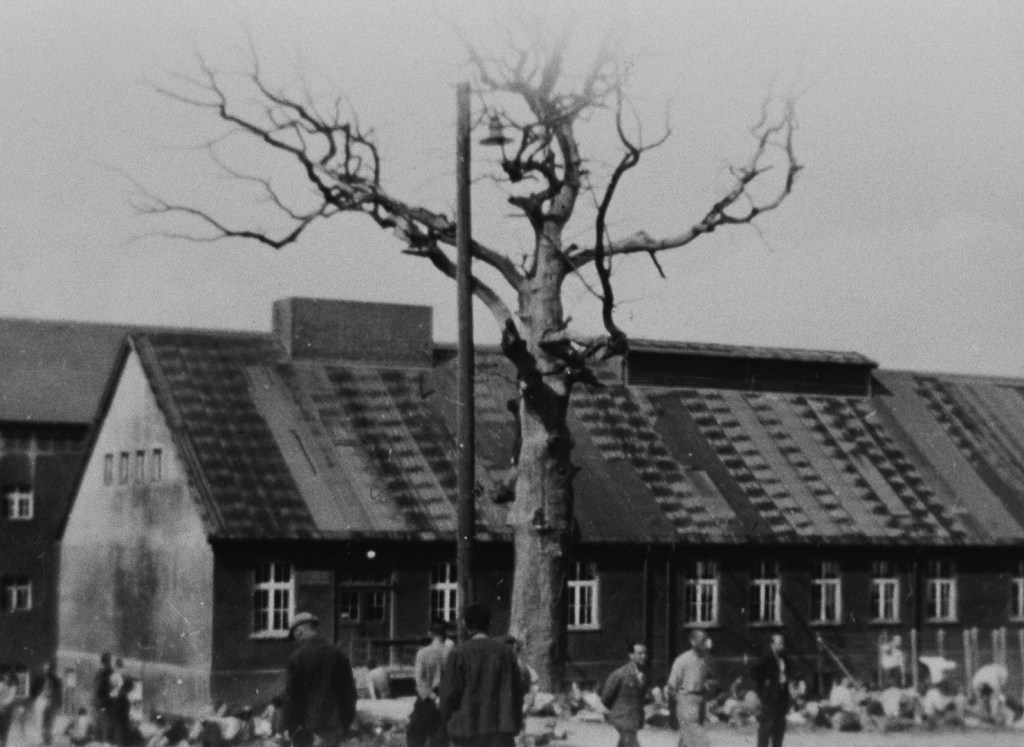
This assignment, for a French film class, was to apply formal film analysis techniques to a single frame in order to extract as much information from the visual language of filmmaking as possible. I chose a frame from Alain Resnais’ Night and Fog depicting the Goethe oak at the Buchenwald concentration camp, connecting the focus on the tree and the ambiguity of its surroundings to the banality of abuse and brutality at the Nazi camps and the decay of the Nazi regime.
Sickness in the roots of the Nazi regime
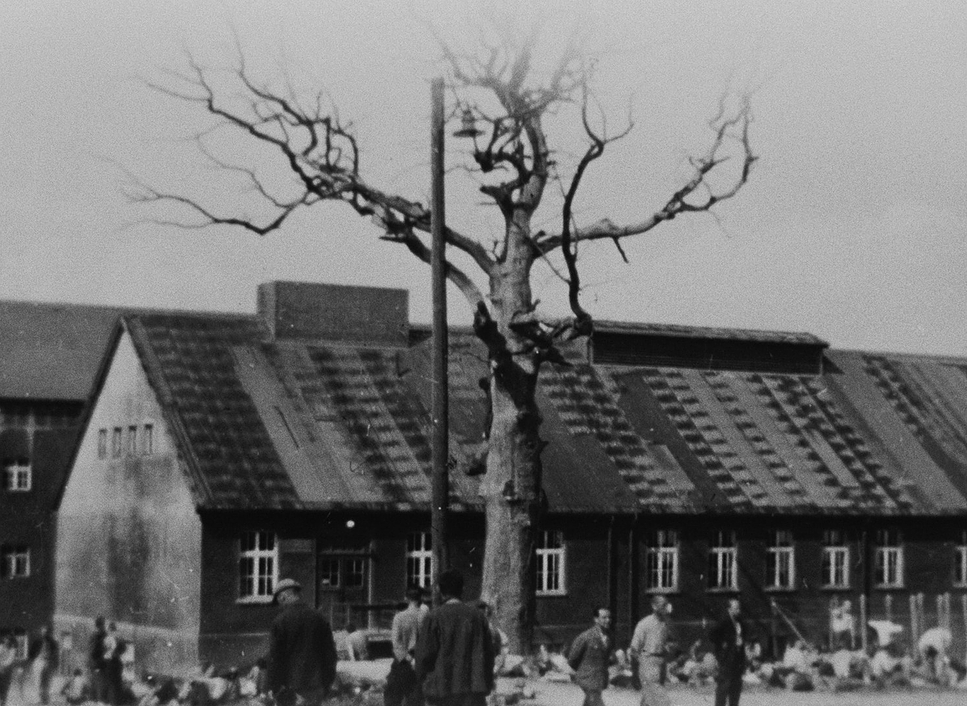
Fig. 1. Night and Fog. Oak tree at Buchenwald concentration camp. Dir. Alain Resnais. Argos, 1956.
This shot, featured in Alain Resnais’ 1955 short film documentary Night and Fog (15:26) depicts the Goethe oak at the Buchenwald concentration camp, preserved while the rest of the forest was cleared during the camp’s rapid construction. The name refers to German poet Johann Wolfgang von Goethe, who lived in nearby Weimar for the majority of his life. The shot is an archival photo, and prominently features the tree in the center of the shot with all its branches within the frame. Individuals in plain clothes — not obviously uniformed — walk in front of the tree, cut off by the bottom edge of the frame and out of focus. Figures in white shirts kneel and lie below the tree and against a wire fence extending past the right edge of the frame. The tree stands in front of two long, utilitarian buildings, their purpose unclear.
Though large parts of the film focus on graphically depicting the horrors inflicted on victims of the Nazis, this shot is part of a sequence discussing amenities provided to camp officers and the dissonance of the camps’ environs versus their purposes. As a result, the people in the image are unclear in their roles and their relations to each other; the figures in white shirts could be prisoners, or trainees, or schoolchildren, but their positioning betrays little beyond their similar clothing. Similarly, the buildings bear no outward markings conveying their purpose; they could be guard barracks, storage houses, crematoriums, factories. By this point in the film, we already know what happens inside the camps. The shot doesn’t need to convey power dynamics or abuse or reveal the horrors of a largely clandestine genocide. Instead, the focus is entirely on the tree and the entirety of the tree.
Oak trees, classically, are grand, shady, and long-lived; the image of an oak tree shown here betrays something deeply wrong. The tree bears no leaves, but the lack of snow and the lightweight clothing worn by the people in the image indicate warmer weather. Thick knots on the trunk show where massive branches have already fallen. Though bearing the name of one of Germany’s great authors and preserved for its cultural and aesthetic value, the tree is sick and dying if not already dead. While the individuals are ambiguous, unfocused and decentered, the image still effectively reveals the decay at the roots of the Nazi regime and its impending fall.

